

The Cost of My Energy Bill
To learn about the cost of your electric bill, look at the “KWH Usage History” graph on your electric bill and compare your current usage with a year ago. Members can also sign up for a SmartHub account and track their daily usage. Take into consideration that the current weather conditions may have been different a year ago. In the wintertime, extreme cold will cause higher usage for space heaters, livestock heaters or vehicle block heaters. In the summertime, running air conditioners, dehumidifiers and watering gardens are the common reason for higher usage. Also take into consideration that if you are gone on vacation, there are certain appliances (ex. security lights, refrigerators, freezers, hot water heater, etc.) that continue to use electricity even though you are not there.
If you still find a dramatic change in your usage, then you need to start checking your electrical devices. They could be running constantly or turning on and off for very short periods of time which is called short cycling. Here are some common problems that can raise your usage:
- Well pump that runs continuously or that has a pinhole leak in the pipe
- Electric water heaters that are leaking or have a defective heating coil
- Air conditioners that are low on Freon coolant
- Faulty thermostats
If you feel you need help after checking all these possibilities, please give us a call. Keep in mind that it is rare for the meter to be at fault and when meters are at fault they usually run slower not faster.
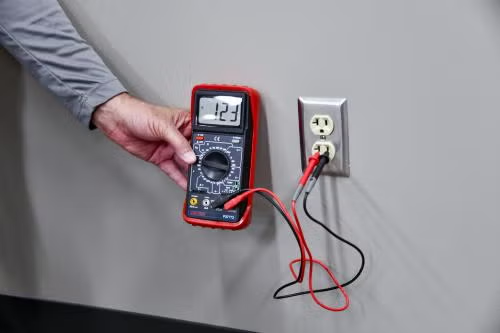
Volt meters can be used to find the voltage of your outlets to ensure appliances won't exceed the maximum voltage allowed.